Read the direction.
Intersecting bands make a grid. Record the two repeat directions and the separate colour roles before reviewing garment placement.
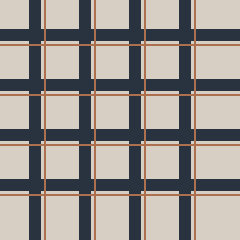
Compare the overall scale.
Small checks can merge at a distance, while larger checks divide the garment into visible areas. Compare at equal viewing scale; a magnified crop is not a measurement.
Record the structure.
A balanced check can read similarly along and across the cloth; an asymmetric check may have a stronger direction. Show which way the design should run on front, sleeve and pocket pieces.
Separate the colour decisions.
Choose a ground, principal check and optional accent. Keep colour changes separate from requests to change line width or repeat.
Place it on the garment.
Match conspicuous joins first: centre front, centre back and patch pockets. Ask the cutter what the repeat and usable width mean for the actual marker.
A comparison you can take to the sample table.
Scroll the table horizontally on small screens.
| Decision | Record | Resolve with the next sample |
|---|---|---|
| Appearance | Check tweed as the starting direction | Wider view of the entire repeat |
| Scale | Measured repeat, or a question if unknown | Physical scale reference |
| Construction | Important panel and matching points | Garment panel or prototype |
| Specification | Confirmed values and buyer targets separately | Composition, weight and usable width of the exact reference |
Fields for this pattern brief.
- Grid repeat in both directions
- Band widths and colour roles
- Balanced or directional grid
- Priority matching points
- Physical reference and sample format
Move from preference to approval.
Label the reference as inspiration, a candidate fabric or an approved requirement. Include the source and date. If the pattern is still open, compare one alternative using the same viewing scale and colour direction.
A pattern label does not confirm fibre content, performance, stock or development feasibility. Ask for the documented specification of the exact sample, and identify the decision you need the next sample to support.
Solve the next buying problem.
Why do checked panels look mismatched even when the colours match?
Compare the sequence of bands, not just the dominant colour. A balanced check and an unequal sequence need different panel-orientation decisions. Mark one identifiable intersection on the face of the sample. Follow that same intersection across the front opening, pockets and back seam on the sketch.
Should every seam match?
Set priorities before making the marker. A front opening may be essential while a concealed seam may be less important. Record required, preferred and optional matches. Ask the cutting team to price and plan those priorities with the actual usable width and size range rather than imposing a universal extra-fabric percentage.