Read the direction.
A layered check combines smaller structures within a larger pattern. Review both the broad arrangement and the detail that gives it clarity.
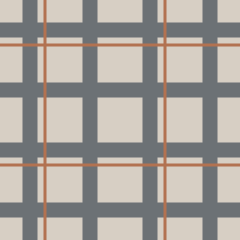
Compare the overall scale.
Use two views: one showing complete repeats and one showing the smaller contrasting areas. A close-up alone can conceal the hierarchy of the design.
Record the structure.
Identify the main repeat before describing any overcheck. Ask which components are fixed in an existing reference and which require new development.
Separate the colour decisions.
Record the ground, internal check contrast and optional overcheck separately. A colour instruction for one layer should not accidentally recolour the whole motif.
Place it on the garment.
On a jacket, a large structural check and a small internal check create different matching decisions. Mark the main alignment priorities on the technical sketch.
A comparison you can take to the sample table.
Scroll the table horizontally on small screens.
| Decision | Record | Resolve with the next sample |
|---|---|---|
| Appearance | Glen check tweed as the starting direction | Wider view of the entire repeat |
| Scale | Measured repeat, or a question if unknown | Physical scale reference |
| Construction | Important panel and matching points | Garment panel or prototype |
| Specification | Confirmed values and buyer targets separately | Composition, weight and usable width of the exact reference |
Fields for this pattern brief.
- Main repeat in two directions
- Internal pattern and overcheck
- Colour role for each layer
- Main matching priorities
- Reference versus development request
Move from preference to approval.
Label the reference as inspiration, a candidate fabric or an approved requirement. Include the source and date. If the pattern is still open, compare one alternative using the same viewing scale and colour direction.
A pattern label does not confirm fibre content, performance, stock or development feasibility. Ask for the documented specification of the exact sample, and identify the decision you need the next sample to support.
Solve the next buying problem.
Why does a glen check look busy in a garment?
Look separately at the fine internal pattern and the larger grid. A small photograph can emphasise one and hide the other. Compare the candidate at garment distance and at the width of the intended panel. If the larger grid dominates, reduce its contrast or discuss a different repeat rather than changing the entire fabric direction.
What should a colour adaptation preserve?
Label the ground, fine pattern and any overcheck separately. Explain which visual layer is the identity of the design. Ask for one controlled colour change first so feedback can identify its effect. Preserve the original reference alongside the revised sample instead of approving from memory.