Read the direction.
Direction, stripe spacing and colour rhythm define the visual brief. Record the repeat, not just the width of a single stripe.
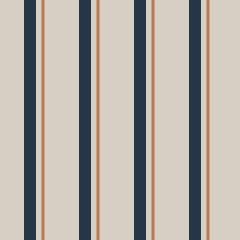
Compare the overall scale.
Identify the full sequence of stripe colours and widths. A narrow crop may omit part of the sequence and create a misleading reference.
Record the structure.
Mark the intended stripe direction on fronts, sleeves, cuffs and pockets. Bias or rotated panels should be a deliberate garment design decision.
Separate the colour decisions.
Ask whether the repeat is symmetric and how the edges of garment panels will read together. An asymmetric sequence needs careful orientation control.
Place it on the garment.
Keep cloth repeat and garment matching priorities with the cutting brief. Consumption must be assessed against the actual size range, usable width and marker.
A comparison you can take to the sample table.
Scroll the table horizontally on small screens.
| Decision | Record | Resolve with the next sample |
|---|---|---|
| Appearance | Striped tweed as the starting direction | Wider view of the entire repeat |
| Scale | Measured repeat, or a question if unknown | Physical scale reference |
| Construction | Important panel and matching points | Garment panel or prototype |
| Specification | Confirmed values and buyer targets separately | Composition, weight and usable width of the exact reference |
Fields for this pattern brief.
- Full stripe sequence
- Repeat dimension and units
- Panel direction
- Symmetry and matching priorities
- Garment marker review
Move from preference to approval.
Label the reference as inspiration, a candidate fabric or an approved requirement. Include the source and date. If the pattern is still open, compare one alternative using the same viewing scale and colour direction.
A pattern label does not confirm fibre content, performance, stock or development feasibility. Ask for the documented specification of the exact sample, and identify the decision you need the next sample to support.
Solve the next buying problem.
Why does a stripe direction matter before sampling?
Stripes can become visually prominent at front openings, sleeves and pockets. Identify whether the design should run along or across the main garment panels, using the actual fabric orientation. Send the supplier and pattern maker the same marked sketch so the reference is not interpreted differently.
Can I estimate stripe matching from a swatch?
A swatch can identify the visual sequence, but it cannot settle the garment marker. Record the complete repeat, usable width, size range and matching rules. Ask the cutting team to assess the actual layout. Include any one-way surface instruction that limits rotating pieces.