Read the direction.
Alternating diagonal directions create the familiar zigzag effect. Herringbone is a pattern or weave direction found in different cloth categories, not a fibre composition.
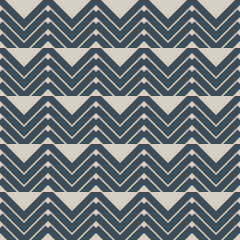
Compare the overall scale.
Assess the width and visibility of the zigzag over a garment-sized view. Closely related yarn colours can make the direction subtle; stronger contrast can emphasise it.
Record the structure.
Show the intended vertical direction on the garment sketch. A rotated panel can change how diagonal lines meet, even when the fabric is the same.
Separate the colour decisions.
Keep stripe-like colour effects separate from the underlying directional structure. Record whether you want a quiet tonal appearance or a clearly graphic zigzag.
Place it on the garment.
Compare the two sides of the proposed cloth and ask about intended face and direction. Do not infer reversible garment suitability from a photograph.
A comparison you can take to the sample table.
Scroll the table horizontally on small screens.
| Decision | Record | Resolve with the next sample |
|---|---|---|
| Appearance | Herringbone in tweed as the starting direction | Wider view of the entire repeat |
| Scale | Measured repeat, or a question if unknown | Physical scale reference |
| Construction | Important panel and matching points | Garment panel or prototype |
| Specification | Confirmed values and buyer targets separately | Composition, weight and usable width of the exact reference |
Fields for this pattern brief.
- Zigzag visibility and width
- Ground and contrast roles
- Garment orientation
- Intended fabric face
- Larger sample for panel comparison
Move from preference to approval.
Label the reference as inspiration, a candidate fabric or an approved requirement. Include the source and date. If the pattern is still open, compare one alternative using the same viewing scale and colour direction.
A pattern label does not confirm fibre content, performance, stock or development feasibility. Ask for the documented specification of the exact sample, and identify the decision you need the next sample to support.
Solve the next buying problem.
Why do adjacent herringbone panels read differently?
Identify the stripe or chevron orientation on the actual face. A panel rotated or cut in another direction can change how the motif reads. Mark orientation on all visible pieces before cutting, including pockets, lapels and sleeves. Confirm whether the design intends continuity or a deliberate change.
Is a herringbone motif enough to select a jacket cloth?
No. Discuss composition, usable width, weight, body, handle and intended construction for the exact candidate. A clear chevron can appear in cloths with different physical behaviour. Review a construction panel with the proposed support and lining before treating the visual direction as garment approval.